Endovenous Laser Treatment for varicose veins (EVLT) Dr Abhishek Bairy – Specialist in Pune
Endovenous Laser Treatment for varicose veins EVLT. Safe, minimally invasive solution performed by Dr Bairy, Interventional Radiologist Pune. EVLT relieves pain, swelling, and heaviness in the legs while improving circulation, appearance, and quality of life with faster recovery compared to surgery.
Abhishek Bairy
1/17/20264 min read
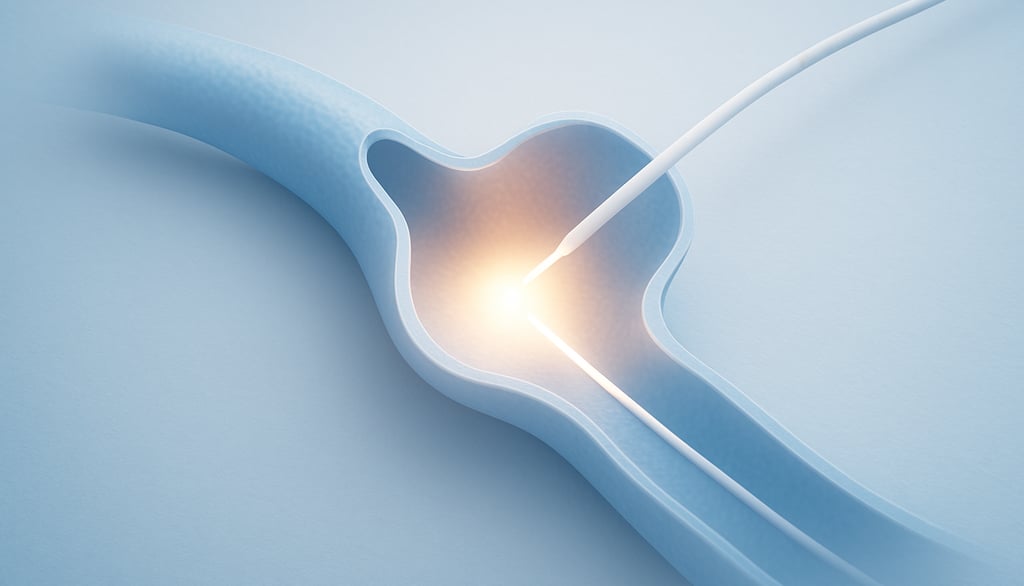
Laser Treatment for Varicose Veins (EVLA / EVLT)
Varicose veins are a very common vascular condition affecting a large number of people worldwide. They can cause pain, discomfort, swelling, and cosmetic concerns. Thanks to advances in medical technology, laser treatment for varicose veins has emerged as a safe, effective, and minimally invasive solution.
Endovenous Laser Ablation (EVLA), also known as Endovenous Laser Treatment (EVLT), is an FDA-approved procedure with a success rate of nearly 98%. It offers long-lasting relief from symptoms while improving the appearance of the legs.
Understanding Varicose Veins
Varicose veins are enlarged, twisted veins that commonly occur in the legs. They develop when the valves inside the veins become weak or damaged, causing blood to pool instead of flowing normally back to the heart.
Common symptoms include:
Aching or heaviness in the legs
Pain or throbbing, especially after prolonged standing
Swelling around the ankles or lower legs
Visible, bulging or twisted veins
Skin discoloration, itching, or ulcers in advanced cases
What Is Laser Treatment for Varicose Veins?
Laser treatment is a minimally invasive, image-guided procedure performed by a vascular specialist or interventional radiologist.
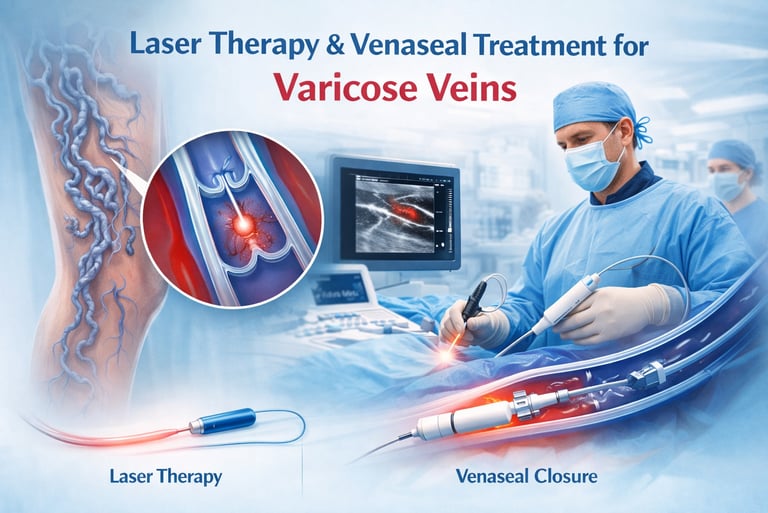
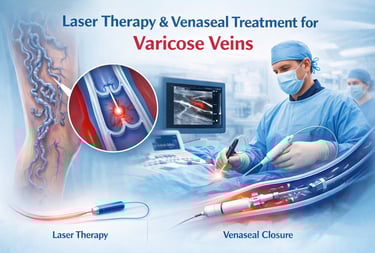
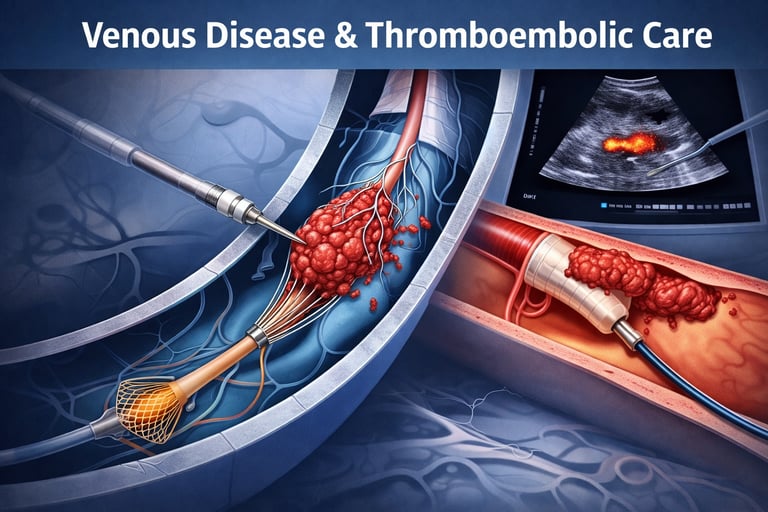
A thin laser fibre is inserted into the affected vein through a tiny puncture. The laser heat seals the vein from inside, closing it permanently. Blood is naturally redirected to healthier veins, and the treated vein is gradually absorbed by the body.
What to Expect During the Procedure:
1. Consultation and Evaluation
Your doctor will assess your symptoms and examine your veins using ultrasound to identify the affected veins and plan treatment.
2. Local Anaesthesia
The procedure is done under local anaesthesia, so you remain awake but pain-free.
3. Laser Treatment
A laser fibre is guided into the vein using ultrasound. The laser energy closes the vein safely and precisely.
4. After the Procedure
Compression stockings are usually advised
Mild discomfort or tightness may be felt for a few days
Most patients walk immediately and go home the same day
Recovery and Results
Normal daily activities can usually be resumed within 1–2 days
Strenuous exercise may be avoided for a short period
Symptoms like pain, swelling, and heaviness gradually improve
Visible veins fade over weeks to months
Benefits of Laser Treatment for Varicose Veins
✔ Minimally invasive, no major surgery
✔ High success rate and long-lasting results
✔ Performed as a day-care procedure
✔ Less pain and faster recovery
✔ Minimal scarring
✔ Improved cosmetic appearance
✔ Lower risk of complications compared to surgery
✔ Significant improvement in quality of life
Is Laser Treatment Right for You?
Laser therapy is suitable for many patients with varicose veins, but a proper evaluation is essential. A consultation with a vascular specialist will help determine the best treatment option based on your symptoms, vein anatomy, and overall health.
Laser treatment for varicose veins is safe, effective, and patient-friendly. It provides relief from symptoms while restoring comfort, confidence, and mobility.
Frequently Asked Questions (FAQ)
Laser Treatment for Varicose Veins (EVLA / EVLT)
🔹 What is laser treatment for varicose veins?
Laser treatment, also called Endovenous Laser Ablation (EVLA or EVLT), is a minimally invasive procedure that uses laser energy to close faulty veins causing varicose veins.
🔹 Is this a surgery?
No. It is not open surgery. The procedure is done through a tiny puncture, without cuts or stitches, and is performed as a day-care procedure.
🔹 Is the procedure painful?
Most patients experience mild discomfort. Local anaesthesia is used to numb the area. Mild tightness or soreness may be felt for a few days after treatment.
🔹 How long does the procedure take?
The procedure usually takes 30–60 minutes, depending on the number of veins treated.
🔹 Will I need hospital admission?
No. Laser treatment for varicose veins is usually an outpatient procedure, and you can go home the same day.
🔹 When can I return to normal activities?
Most patients can walk immediately and return to routine activities within 1–2 days. Heavy exercise may be restricted for a short period.
🔹 Will I need to wear compression stockings?
Yes. Compression stockings are usually advised for a few days to weeks to reduce swelling and improve healing.
🔹 Are the results permanent?
Yes. The treated vein is permanently closed. Blood flow is naturally redirected to healthy veins. New varicose veins may develop over time, especially if risk factors persist.
🔹 Will the treated vein be removed?
No. The vein is not removed. It shrinks and is gradually absorbed by the body.
🔹 Is laser treatment safe?
Yes. EVLA is an FDA-approved procedure with a high success rate and low complication risk when performed by trained specialists.
🔹 Are there any risks or side effects?
Side effects are usually mild and temporary, such as:
Mild pain or tightness
Bruising
Temporary swelling
Serious complications are rare and will be discussed by your doctor before treatment.
🔹 Who is a suitable candidate for laser treatment?
Most patients with symptomatic varicose veins are suitable. An ultrasound examination is essential to confirm eligibility.
🔹 Who performs this procedure?
Laser treatment is performed by a vascular specialist or interventional radiologist trained in image-guided vein treatments.
🔹 When should I consult a doctor?
You should seek medical advice if you have:
Painful or worsening varicose veins
Leg swelling
Skin discoloration or ulcers
Cosmetic concerns affecting quality of life